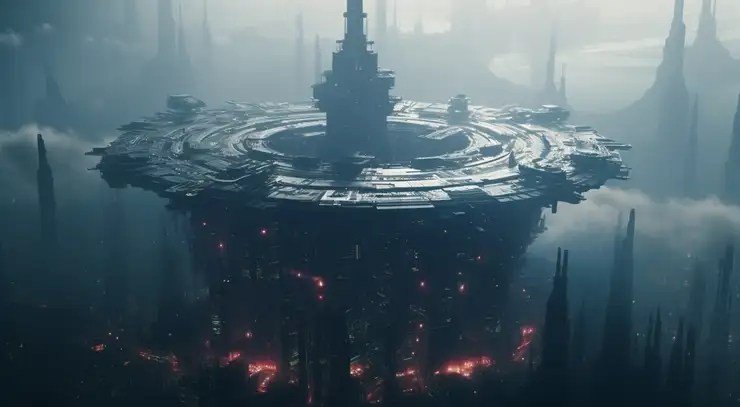
Ever stared at a blank screen, a meticulously crafted alien civilization or a galaxy-spanning conflict simmering in your mind, only to hit a wall trying to name its central city or the protagonist's iconic starship? You're not alone. Worldbuilding, whether for a novel, game, or tabletop RPG, is an exhilarating journey – until you need to invent hundreds of unique, evocative names for every location and object in your vast universe. This is precisely where Sci-Fi Location & Object Name Generators become your indispensable co-pilot, transforming tedious brainstorming into a creative launchpad for galactic worlds and starships alike.
These powerful digital tools don't just spit out random words; they're often trained on extensive databases of sci-fi literature, astronomical terms, technological concepts, and linguistic patterns to create names that feel authentic, professional, and deeply embedded in the genre. They're designed to banish writer's block and infuse your creations with immediate personality, whether you're envisioning the bustling capital of a cybernetic empire or the sleek designation of an experimental hyperspace drive.
At a Glance: Crafting Your Cosmos with Name Generators
- Banish Blank Page Syndrome: Quickly generate thousands of unique, genre-appropriate names for planets, cities, starships, and advanced tech.
- Authenticity Built-In: Many generators use AI and vast databases to produce names that feel genuinely sci-fi.
- Boost Creativity: Use generated names as a starting point, mash them up, or let them inspire new story elements.
- Save Time & Energy: Focus on storytelling and world-details rather than getting bogged down by naming.
- Flexible & Free: Most tools are free to use, offering endless iterations and commercial-ready names.
- Tailor Your Output: Many generators allow keywords and stylistic preferences to refine results.
The Unseen Burden of Naming: Why Generators Are a Lifesaver
Imagine sketching out a vibrant cyberpunk metropolis, complete with towering arcologies, neon-drenched alleyways, and subterranean markets. You need a name that reflects its gritty, high-tech soul – something more evocative than "City 1." Or perhaps you're designing a fleet of interstellar vessels for a galactic federation. Each flagship, transport, and fighter needs a designation that conveys its purpose, its faction, and its unique character. This isn't just about finding a name; it's about finding the right name, one that resonates with your vision and enhances your audience's immersion.
Manually brainstorming such a volume of unique, non-clichéd names can be exhausting. You risk repetition, genericism, or even accidentally replicating existing works. Furthermore, names often need to fit specific linguistic or phonetic patterns you've established for different cultures or technologies within your world. This is where dedicated Sci-Fi Name Generators truly shine, serving as an inexhaustible wellspring of inspiration.
How These Galactic Naming Machines Work Their Magic
At their core, most sci-fi name generators operate on sophisticated algorithms and expansive datasets. They're not just pulling words from a dictionary; they're often analyzing the structure, phonetics, and common tropes of established science fiction names. Some even leverage advanced AI, trained specifically on large corpuses of sci-fi literature and real-world scientific terminology, to understand what makes a name sound "futuristic," "alien," or "technological."
For instance, The Story Shack's generators offer thousands of ideas, providing 10 unique names per session and allowing you to iterate endlessly. Users average 16 ideas, highlighting the iterative nature of the creative process. These tools prioritize authenticity, aiming to create professional-grade names suitable for commercial projects like novels, games, and media, all without requiring attribution. Crucially, they’re regularly updated with new combinations, ensuring a fresh supply of unique ideas.
When you're designing a new city, for example, a generator might ask for keywords describing its nature – "space station," "alien metropolis," "cyberpunk slum." BestNameGenerators.com, for instance, uses AI trained on such patterns to generate up to 30 unique city names, each often accompanied by a brief explanation of its sci-fi characteristics. This contextual input helps the AI tailor its output, creating names that align with your specific vision.
Sculpting Worlds: Mastering Sci-Fi Location Names
The landscapes of science fiction are as varied as the stars themselves. From sprawling orbital habitats to desolate desert planets, each locale needs a name that instantly conveys its essence. Sci-fi location name generators are specifically tuned to capture this breadth, offering distinct categories and styles.
Beyond Earth's Grasp: Naming Planets, Moons, and Stellar Objects
Imagine a rogue planet shrouded in perpetual twilight or a gas giant orbited by dozens of crystalline moons. Their names should evoke wonder, mystery, or even dread.
- Planetary Names: Often combine Latin or Greek roots with modern scientific terms, or use abstract, evocative sounds. Think "Xylos Prime," "Celestia," "Veridia-7."
- Moon Names: Might reflect their parent planet, or have a unique character based on their geology or atmosphere, such as "Luna Ascendant" or "Ganymede Delta."
- Star Systems/Galaxies: Can draw inspiration from constellations, mythological figures, or advanced mathematical concepts – "Vega Concordium," "Andromeda Drift," "The Cygnus Loop."
These generators will typically blend elements like celestial bodies, mythological figures, scientific terms, or even simple, stark linguistic structures to give your cosmic locales a sense of vastness and history.
The Urban Sprawl: Cities, Colonies, and Megastructures
Humanity (or its alien counterparts) rarely exists in isolation. Whether they're clinging to the side of an asteroid or flourishing beneath a bio-dome, settlements need names that tell a story.
- Futuristic Cities: BestNameGenerators.com highlights that sci-fi city names often combine technological elements, space concepts, future ideas, or advanced science like quantum physics or cybernetics. Consider names like "Neo-Kyoto," "Citadel Prime," "Aethelburg."
- Space Stations & Orbital Colonies: These names frequently reflect their function, their benefactors, or their position. Examples include "Deep Space Nine," "Orbital Hub Alpha," "Serenity Station."
- Alien Metropolises: Here, the generator leans into unique phonetic combinations, often aiming for an exotic, non-human sound – "Xylosian Sanctum," "K'tharr," "Valdorian Spire."
When generating city names, consider the city's primary characteristics: Is it a bustling trade hub, a militaristic stronghold, an abandoned ruin? Using keywords like "industrial," "utopian," "subterranean," or "arcology" can significantly refine the generator's output, helping you nail the perfect fit. Remember, sci-fi city names distinguish themselves from fantasy by their emphasis on technology and cosmic elements, rather than magic or medieval themes.
Arming Your Narrative: Generating Sci-Fi Object Names
Beyond locations, the objects within your sci-fi universe – the ships, weapons, gadgets, and technologies – also demand names that convey purpose, power, or peculiar function. These generators are equally adept at crafting labels for the tangible artifacts of your future.
The Vessels of Exploration and War: Starships and Vehicles
Every iconic sci-fi saga has its iconic vessels. The names of your starships, shuttles, and ground vehicles are critical to their identity.
- Starship Names: Can evoke a sense of adventure ("Voyager"), strength ("Enterprise"), speed ("Millennium Falcon"), or a specific faction/purpose ("Executor"). Generators often draw on historical naval names, mythological figures, scientific concepts, or abstract virtues.
- Ground Vehicles & Drones: Might be more functional or descriptive, perhaps indicating their class or primary role. Think "Mantis Tank," "Goliath APC," "Scout Drone 7."
When generating starship names, think about the ship's role. Is it a deep-space explorer, a heavily armed dreadnought, a nimble courier, or a civilian transport? This context will guide you towards more fitting and impactful names.
Tools of the Trade: Weapons, Gadgets, and Technology
From a blasters to terraforming devices, every piece of future tech needs a compelling label.
- Advanced Weapons: Names can be intimidating ("Plasma Disruptor"), highly technical ("Kinetic Scattergun Mk. IV"), or even elegant ("Chrono-Scythe").
- Futuristic Gadgets & Tools: These often have functional, descriptive names that hint at their capabilities ("Gravity Manipulator," "Omni-Tool," "Bio-Scanner").
- AI/Robot Designations: Can range from simple alphanumeric codes ("Unit 734") to more evocative or human-like names ("Aura," "Synapse").
Sci-fi object names can also hint at their origin, manufacturer, or the specific scientific principle they exploit, adding layers of subtle worldbuilding without explicit exposition.
Best Practices for Harnessing the Power of Name Generators
While name generators are powerful tools, their true potential is unlocked when you approach them with a strategic mindset.
- Iterate and Combine: Don't settle for the first name you see. As The Story Shack suggests, generating multiple sets (even 10-30 at a time) gives you options. Mix and match elements from different suggestions. Perhaps "Kaelos" from one list and "Prime" from another becomes "Kaelos Prime."
- Context is King: Before you even click "generate," consider the specific attributes of what you're naming.
- Genre: Is it hard sci-fi, cyberpunk, space opera, dystopian?
- Tone: Is it grim, hopeful, chaotic, orderly?
- Culture/Faction: Does it belong to a militaristic empire, an ancient alien race, or a fledgling human colony?
- Physical Characteristics: Is a planet icy, volcanic, or shrouded in gas? Is a ship sleek, bulky, or asymmetrical?
- Technology Level: Is the name for something ancient and forgotten, or cutting-edge and new?
BestNameGenerators.com emphasizes using relevant keywords for city names to match technology levels, space locations, genre, or origin. Apply this thinking broadly to all your naming needs.
- Don't Be Afraid to Modify: Think of generated names as raw material. Tweak spellings, add hyphens, change a vowel, or combine suffixes and prefixes. "Zylon-5" could become "Zylonia V," or "VoidRunner" could become "The Void Runner."
- Keep a Log and Take Notes: Most generators allow you to copy names to your clipboard. Maintain a document or spreadsheet to save promising ideas. Crucially, add a quick note about why you liked it and what it was intended for. You can also save names in your browser's local storage, as The Story Shack points out.
- Test the Pronunciation: Say the name aloud. Does it roll off the tongue? Is it easy to remember? Does it sound good when spoken in dialogue? An awkward name can pull a reader out of the story.
- Consider In-World Etymology: Even if you don't use it explicitly, thinking about why a location or object has a particular name can add depth. Was it named after a discoverer, a historical event, its unique geological feature, or a tragic battle?
Beyond the Basic: Injecting Lore and Life into Names
A great name doesn't just sound cool; it hints at a story.
- Brief Explanations: As seen with BestNameGenerators.com, short explanations accompanying generated names can spark immediate ideas. Use this as a template. If a generator gives you "Acheron Drift," your internal thought might be, "Acheron? Like the river of Hades. So it's a dangerous, difficult-to-navigate region of space."
- Cultural Context: Different alien races or future human factions might have distinct naming conventions. A militaristic empire might favor harsh, guttural sounds for its warships, while an ancient, spiritual race might use lyrical, nature-inspired names for its sacred places.
- Linguistic Roots: Sometimes, a subtle nod to a real-world language or a fabricated linguistic pattern can give your names a unique flavor and consistency.
Common Naming Pitfalls to Sidestep
Even with the best tools, it's possible to stumble. Being aware of these common missteps can save you headaches later.
- Genericism: Avoiding "Planet X" or "Starship 1" is the whole point of generators, but simply picking the first any name isn't enough. Ensure the chosen name feels unique and fitting for your specific context.
- Inconsistent Naming Conventions: If all your human colonies have Latin-based names, then suddenly one has a name that sounds distinctly alien, it can be jarring. Establish and stick to your rules.
- Over-Reliance Without Customization: Don't just copy-paste. The best results come from using the generator as a springboard, then applying your own creative touch to refine and personalize the names.
- Unintentionally Humorous or Confusing Names: Run names past a friend. What sounds serious to you might accidentally sound silly or resemble something inappropriate to someone else.
The Tech Under the Hood: More Than Just Random Letters
You might wonder how these generators achieve such convincing results. It's often a blend of art and science:
- Phonetic Algorithms: Breaking down common sci-fi sounds and letter combinations (e.g., prevalence of "x," "z," "k," "y," and specific suffixes like "-ia," "-on," "-os").
- Lexical Databases: Vast libraries of real-world scientific terms (astronomy, geology, chemistry, physics), mythological names, and words from various languages.
- Markov Chains & N-grams: Statistical models that predict likely subsequent letters or syllables based on patterns observed in existing sci-fi names.
- Machine Learning/AI: Increasingly, sophisticated generators use neural networks trained on massive datasets of genre fiction, allowing them to learn complex naming patterns and generate highly coherent, context-aware suggestions. This is particularly true for those that can interpret descriptive keywords.
This combination of linguistic rules, extensive data, and advanced computational techniques allows these tools to create names that feel both novel and undeniably "sci-fi."
Charting Your Course: Your Next Steps in Naming Excellence
The journey through the cosmos of creation is an exciting one, and naming should be an integral part of that adventure, not a roadblock. Sci-fi location and object name generators are powerful allies, ready to spark your imagination and populate your universe with memorable, evocative labels.
So, where do you go from here? The answer is simple: experiment. Dive into a generator, input your specific criteria, and see what galactic wonders emerge. Play with different keywords, explore various categories, and don't be afraid to click "generate" a hundred times until that perfect name resonates with your vision.
Remember, a great name is more than just a label; it's a seed of story, a whisper of history, and a beacon that guides your audience deeper into the worlds you painstakingly craft. Let these tools empower you to name the unnamable, navigate the unknown, and build a truly unforgettable sci-fi universe.